
Gently placing a “• (dot)” at the source of the sequence
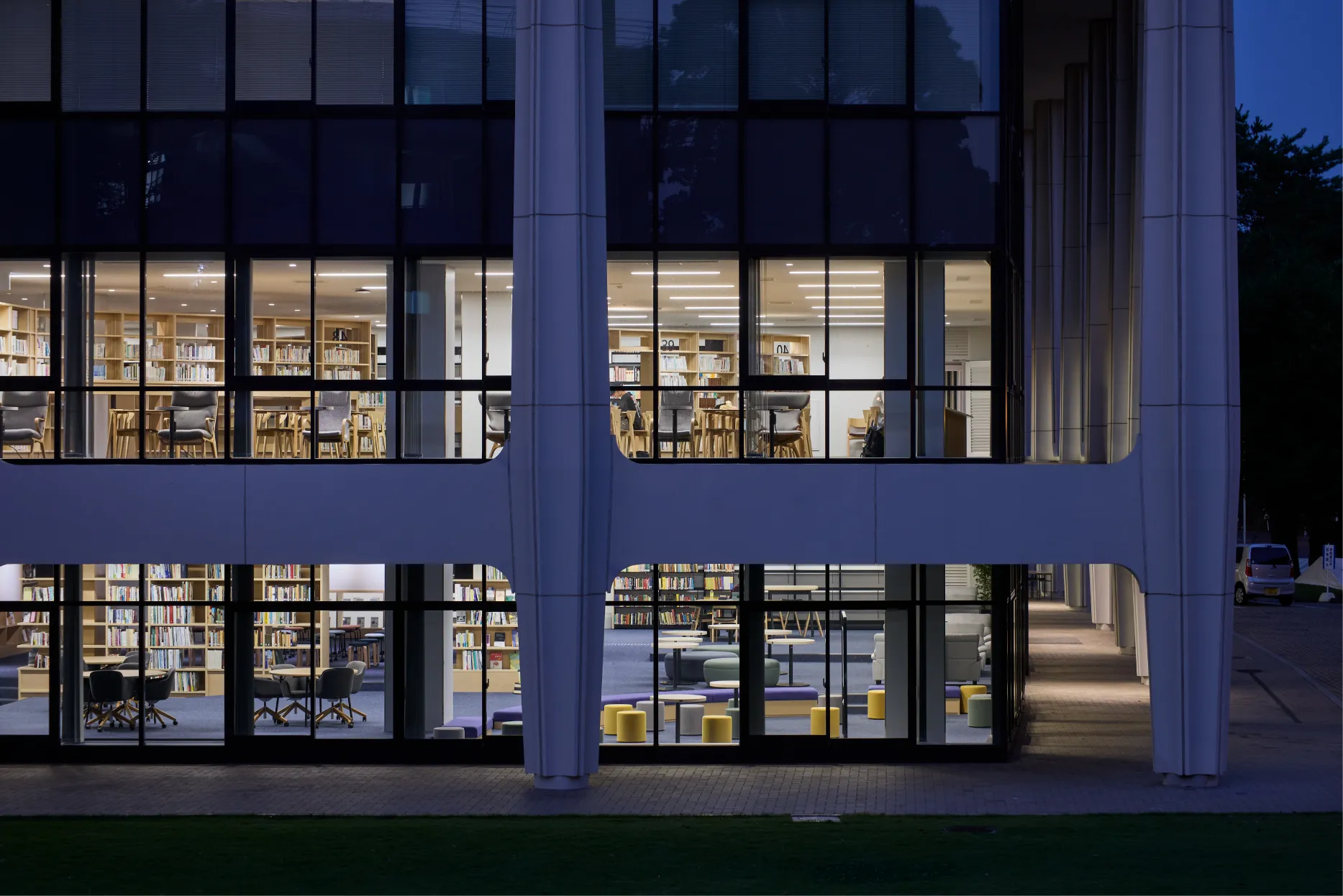
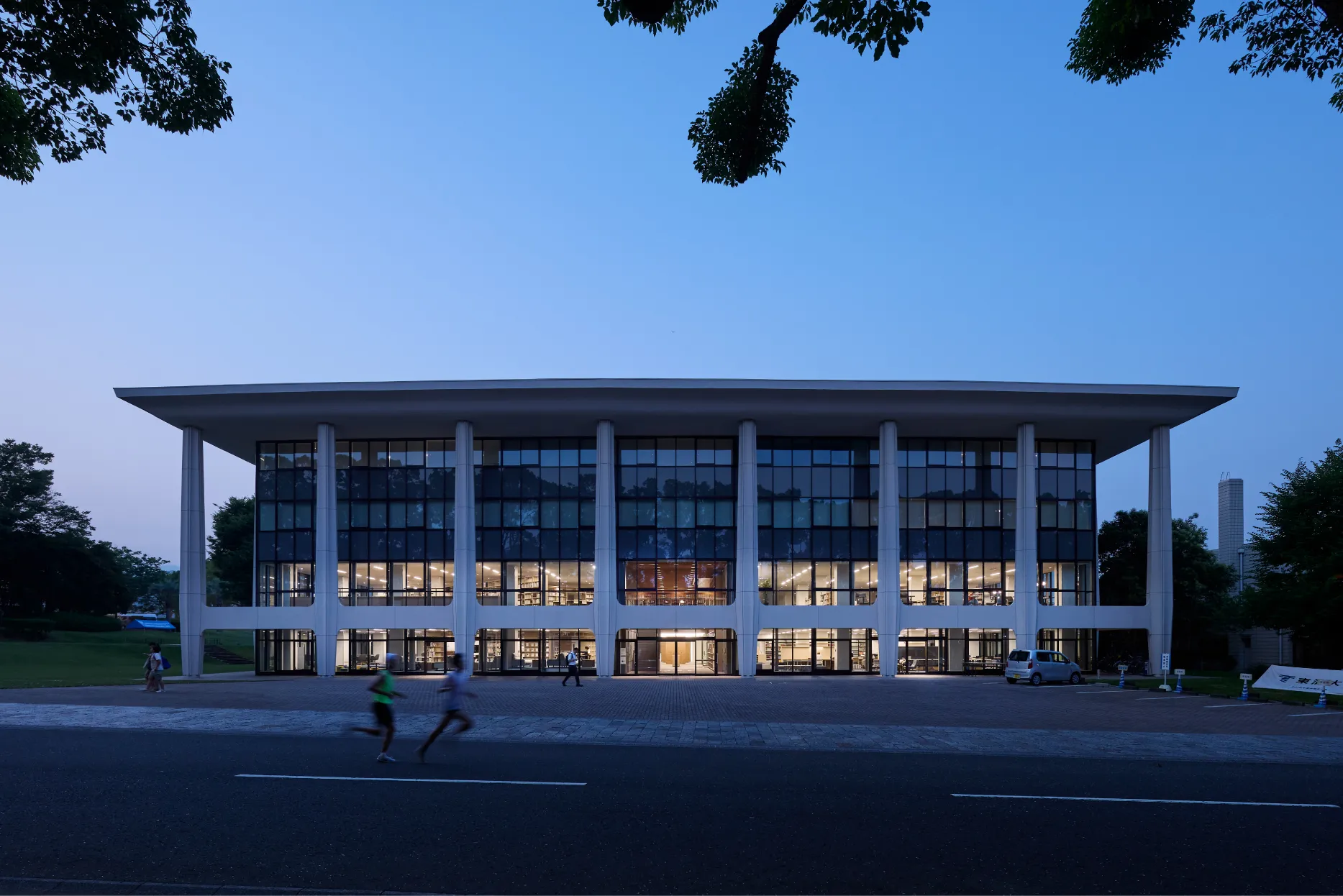
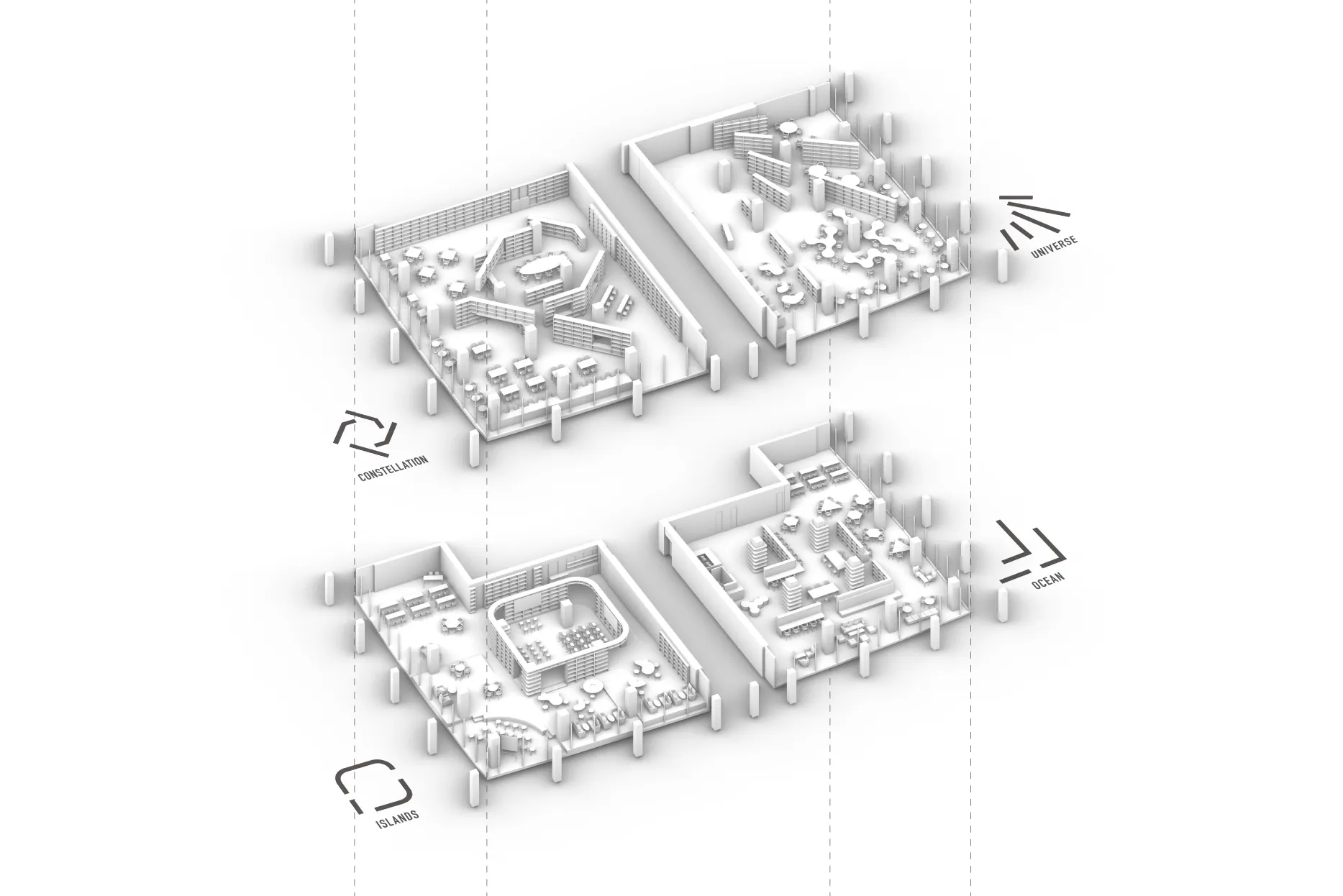
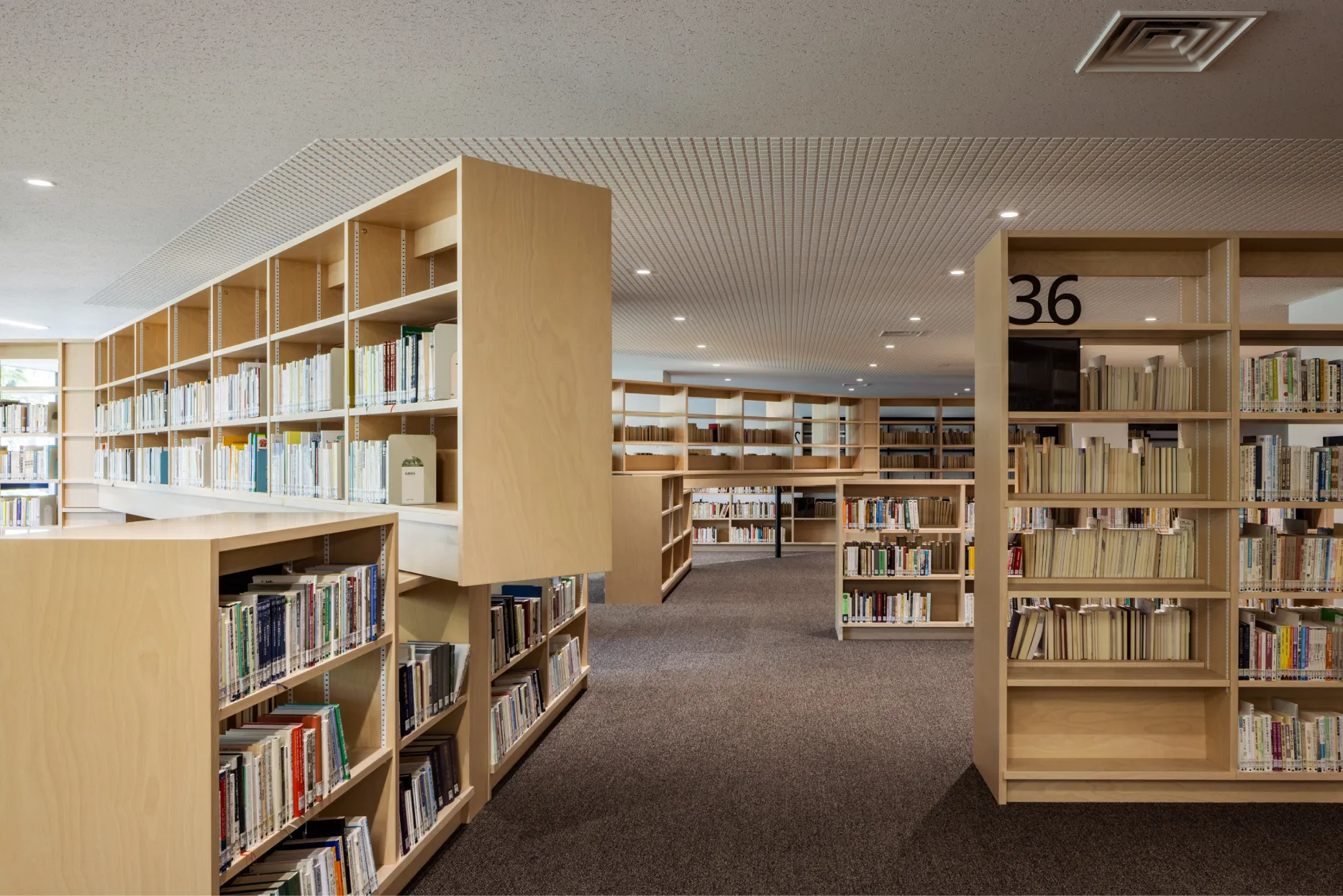
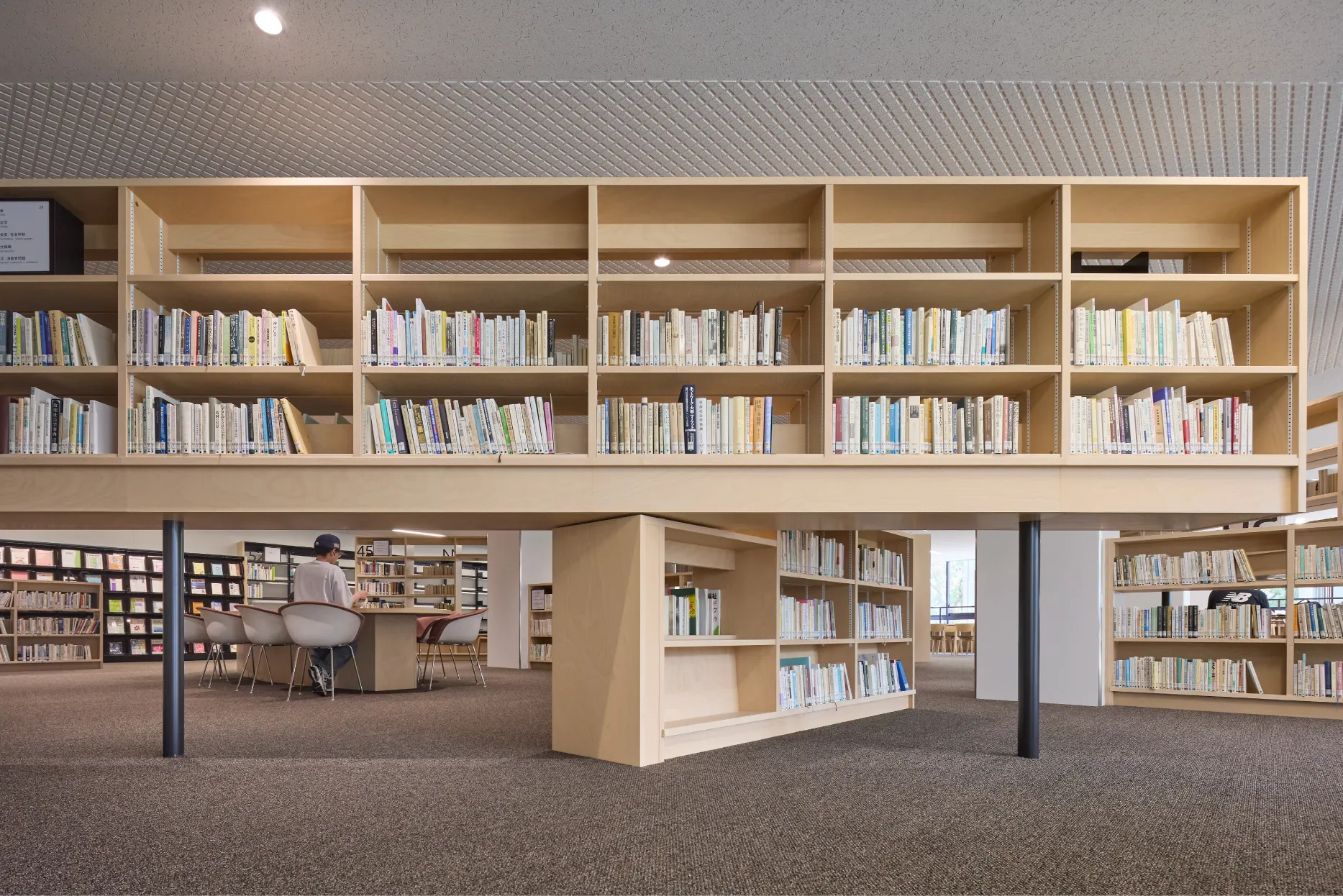
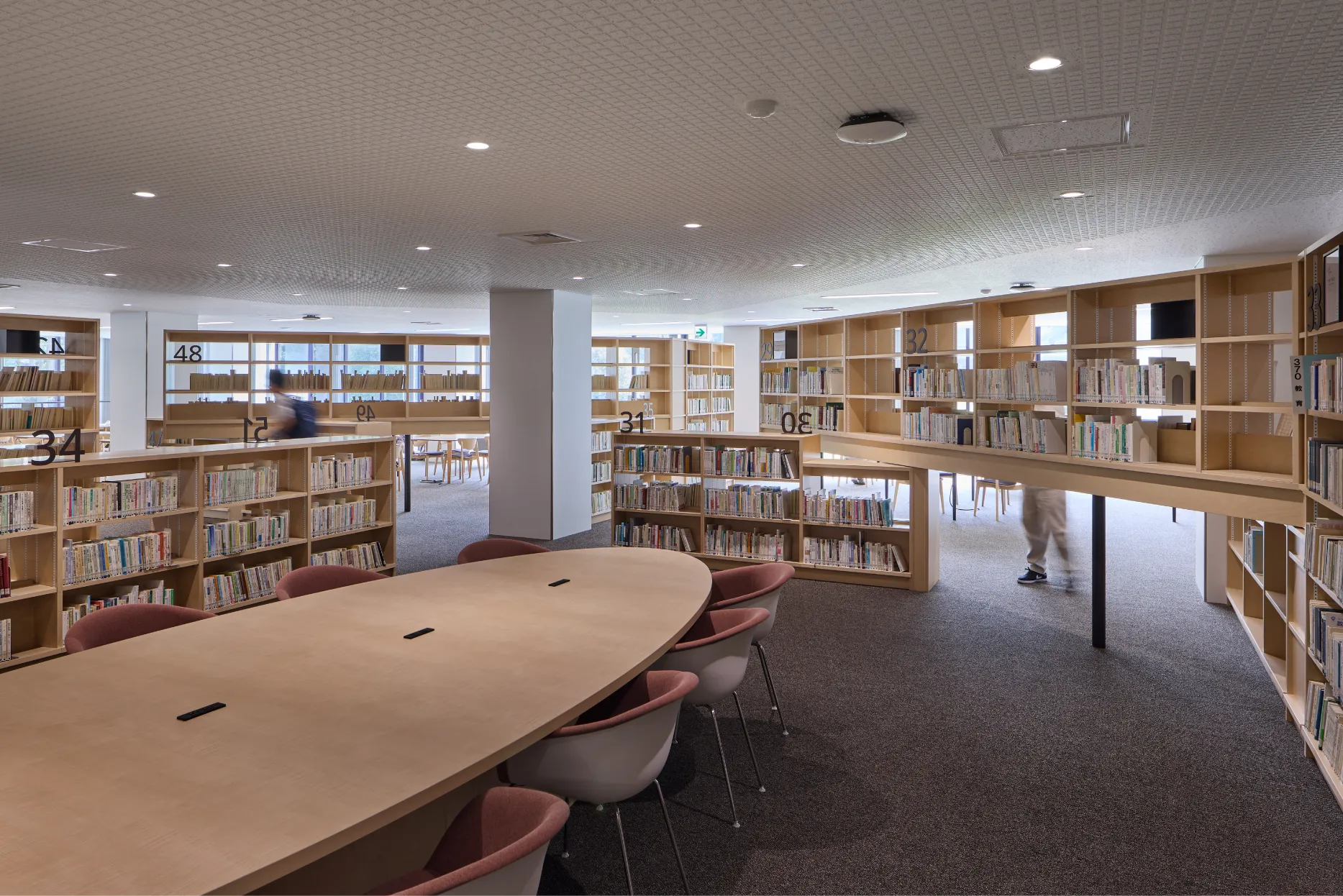
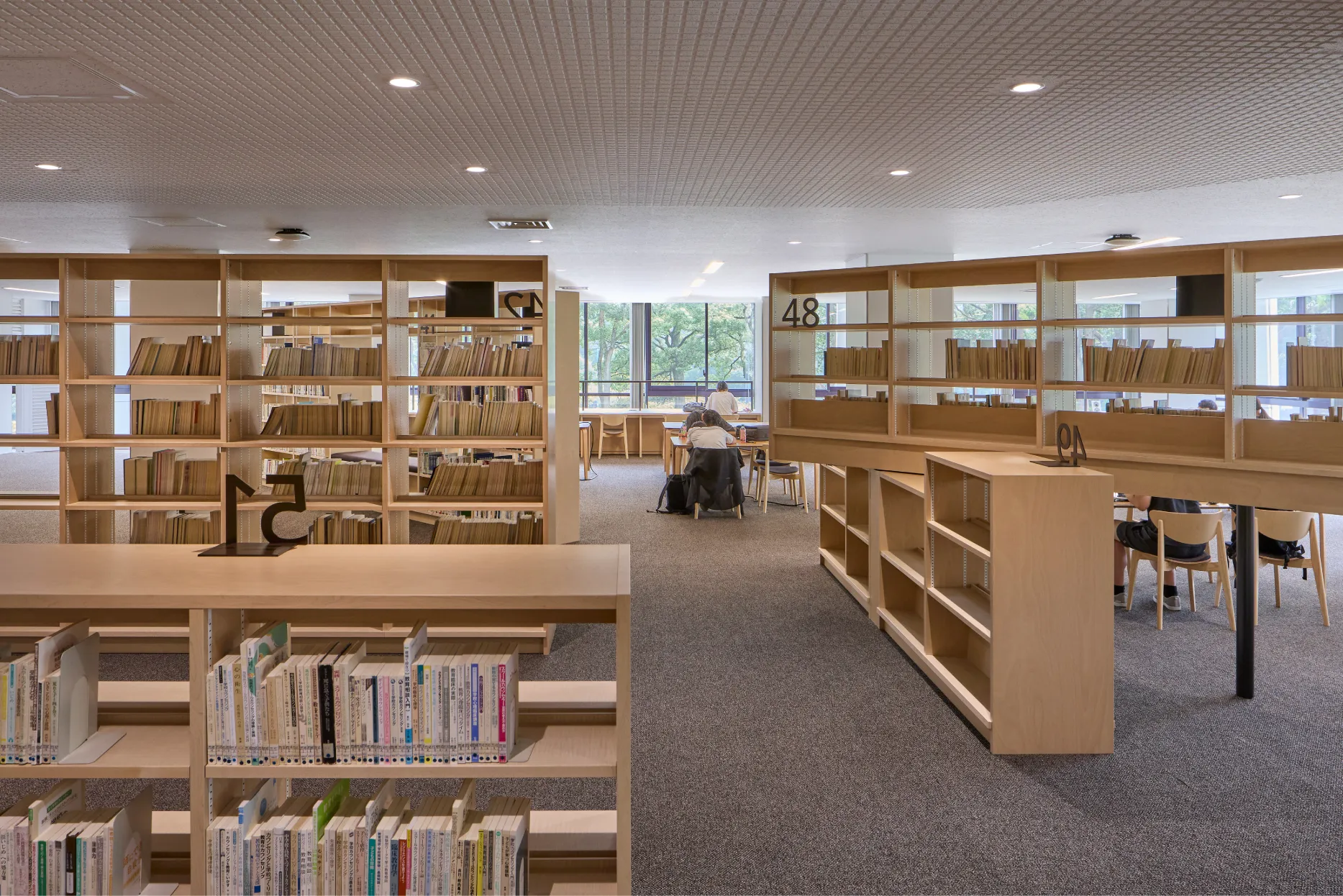
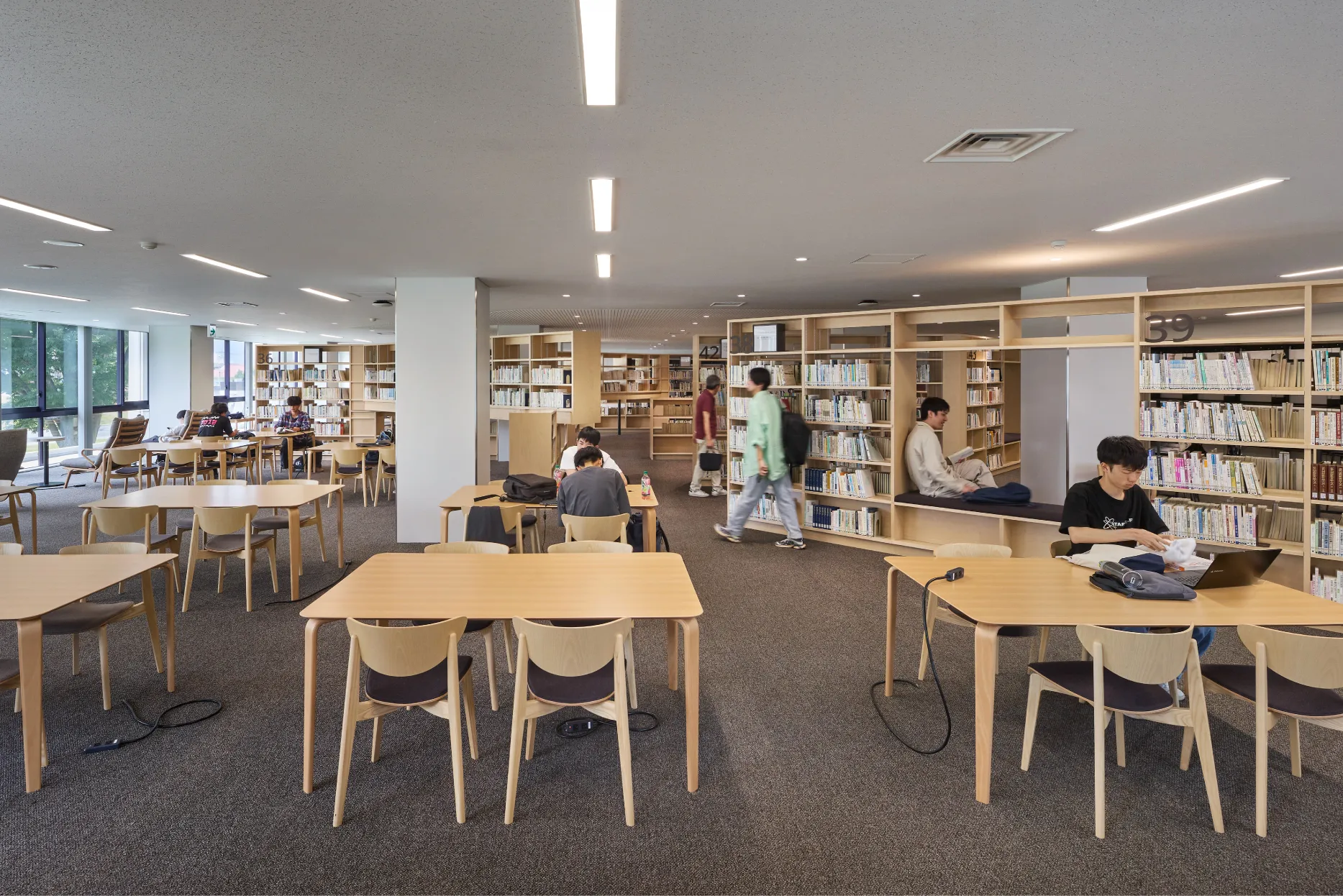
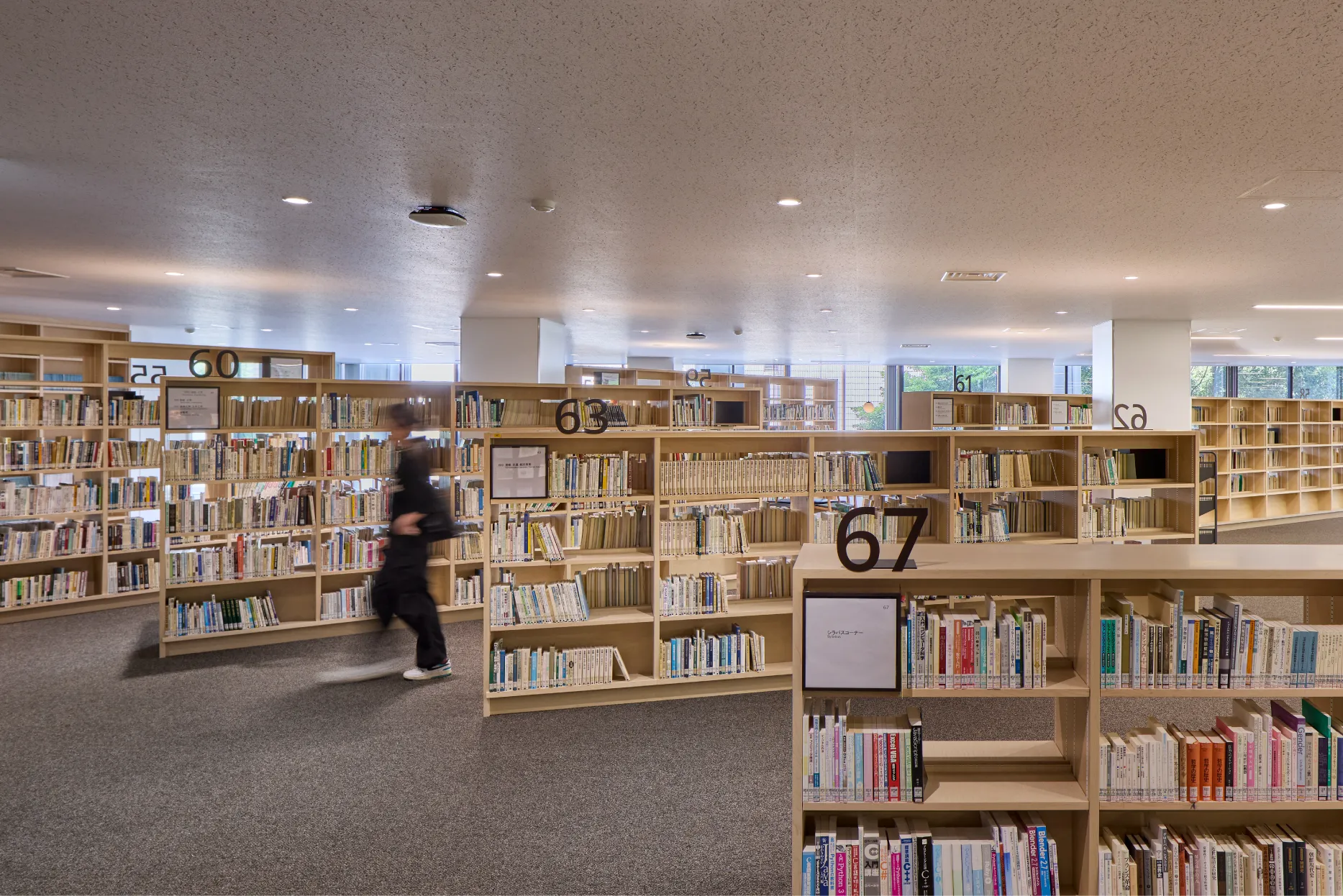
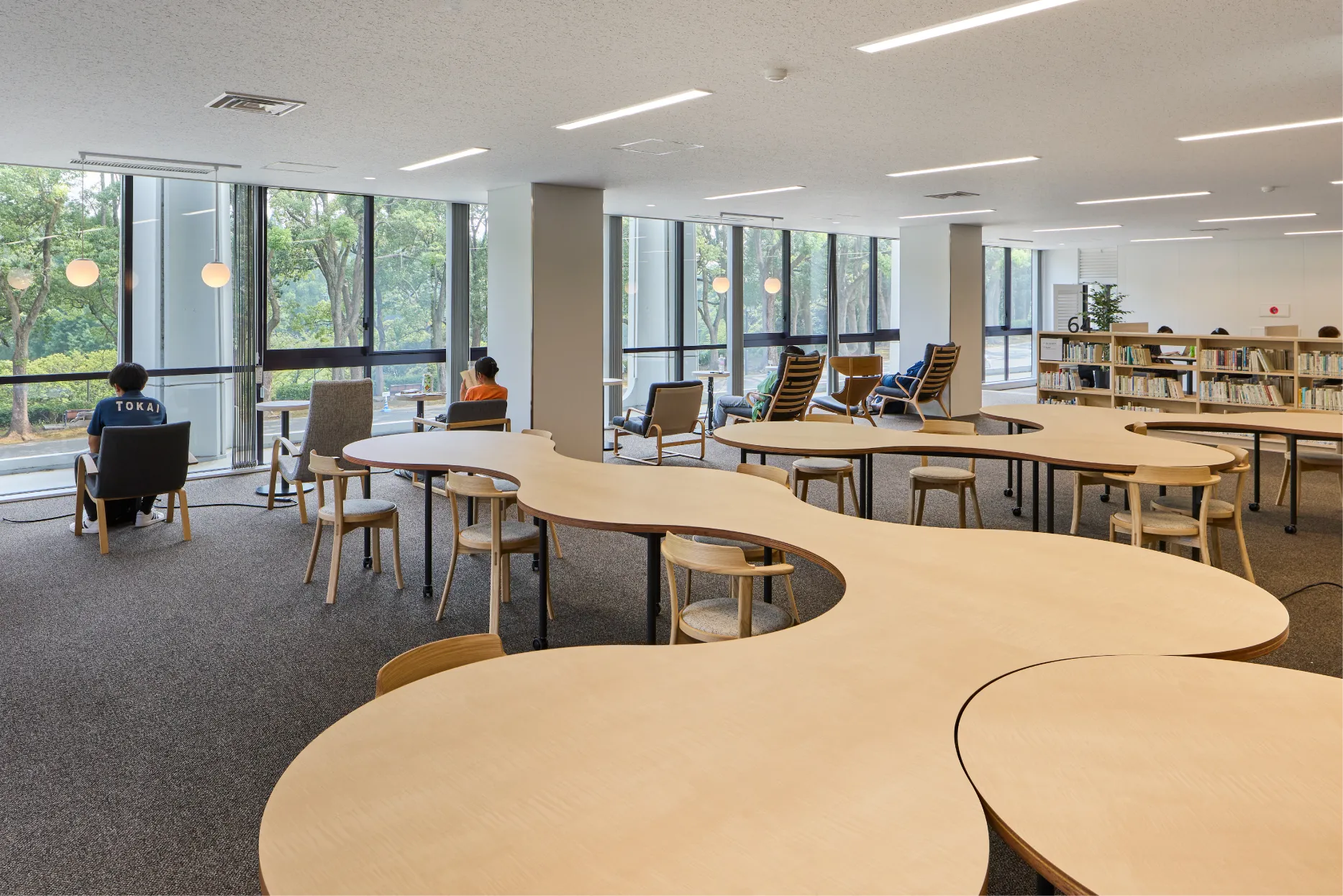
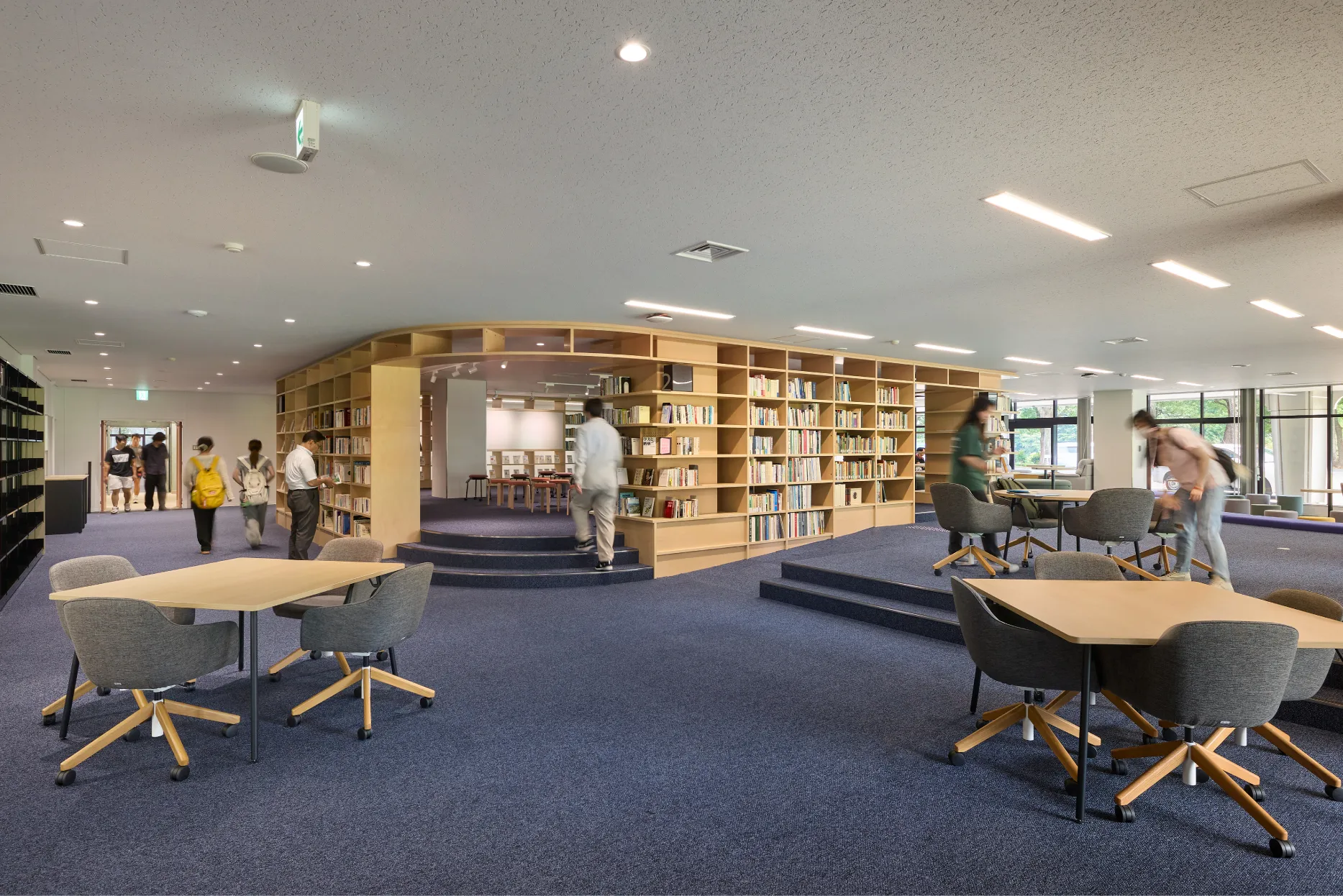
The stage is Building No. 4, designed by Mamoru Yamada, a standard-bearer of modernist architecture. When I first stepped inside, the highly transparent façades, slightly curved and opening in all directions, seemed to borrow the generous topography, sky, trees, and daily life of students so typical of a regional university campus, giving a sense of expansiveness that could go on forever. Mamoru Yamada is also known for having, as a member of the Bunriha (Secession) group, pressed the artistic nature of architecture upon the world. His sculptural and sensuous designs using curved surfaces are often highlighted, but at its root lies a romantic ethos of separating from the past and accepting diverse things across boundaries. (This is my interpretation.) This is precisely the expansive behavior of the aforementioned Building No. 4, and at the same time, it resonates with the learning spirit of Tokai University as it unfolds globally. In converting such a place into a library, it didn't feel right to adopt forms that cut off this sequence; rather, we thought the design should yield to it. So, we traced the sequence that spreads from this building across the entire campus back to its source and tried the method of gently placing a "• (dot)" there, as if letting a drop of paint fall. Specifically, this "•" is a set of designed shelving groups, conceived based on the names* of each main reading room and the movements of people** evoked by their use: "island*-circulation(wandering)**," "ocean*-passage (coming and going)**," "constellation*-interweaving**," and "universe*-diffusion**." To welcome the concrete phenomena beyond the "•"—the environment and people's actions—the shelving forms were made highly abstract and diagrammatic. Each "•" gathers subtle nuances of its surroundings, amplifies them, and introduces variegation into the environment. This creates a diversity of places, from cave-like nooks where one can be alone to plaza-like areas where large groups can debate. We intend for the color placed at the source to bleed outward, sometimes lighter, sometimes darker, mixing with other colors as it enlivens the space. The diagrammatic forms are also practical: they make classification straightforward when shelving books and improve searchability, making them rational. Well over half a century has passed since Building No. 4 was constructed. Although it has taken on a new appearance, the fundamental idea that began with Mamoru Yamada has not changed. Just as water springing from a source travels a long journey, this renovation is by no means the last; it will surely continue, and we hope that it will continue. With that hope in mind, we placed a "•" at the end of the title. * names of the main reading rooms ** movements of people suggested by how the rooms are used.
Project Data
- Discipline:
- Interior
- Use:
- Public Facility, Library
- Gross floor area:
- 3,525.7㎡ (1F–2F of a four-story building)
Project Credits
- Construction:
- Sanno Sogo, Maruzen-Yushodo
- Signage:
- Bikosha
- Photography:
- Tomoyuki Kusunose, SS
Copyright@ 2025 Bunseido All rights reserved